A broken light in the stairwell, a door that doesn't close properly, leaves in front of the entrance and somewhere there's been […]

Clean is good.
But sometimes clean alone isn't enough.
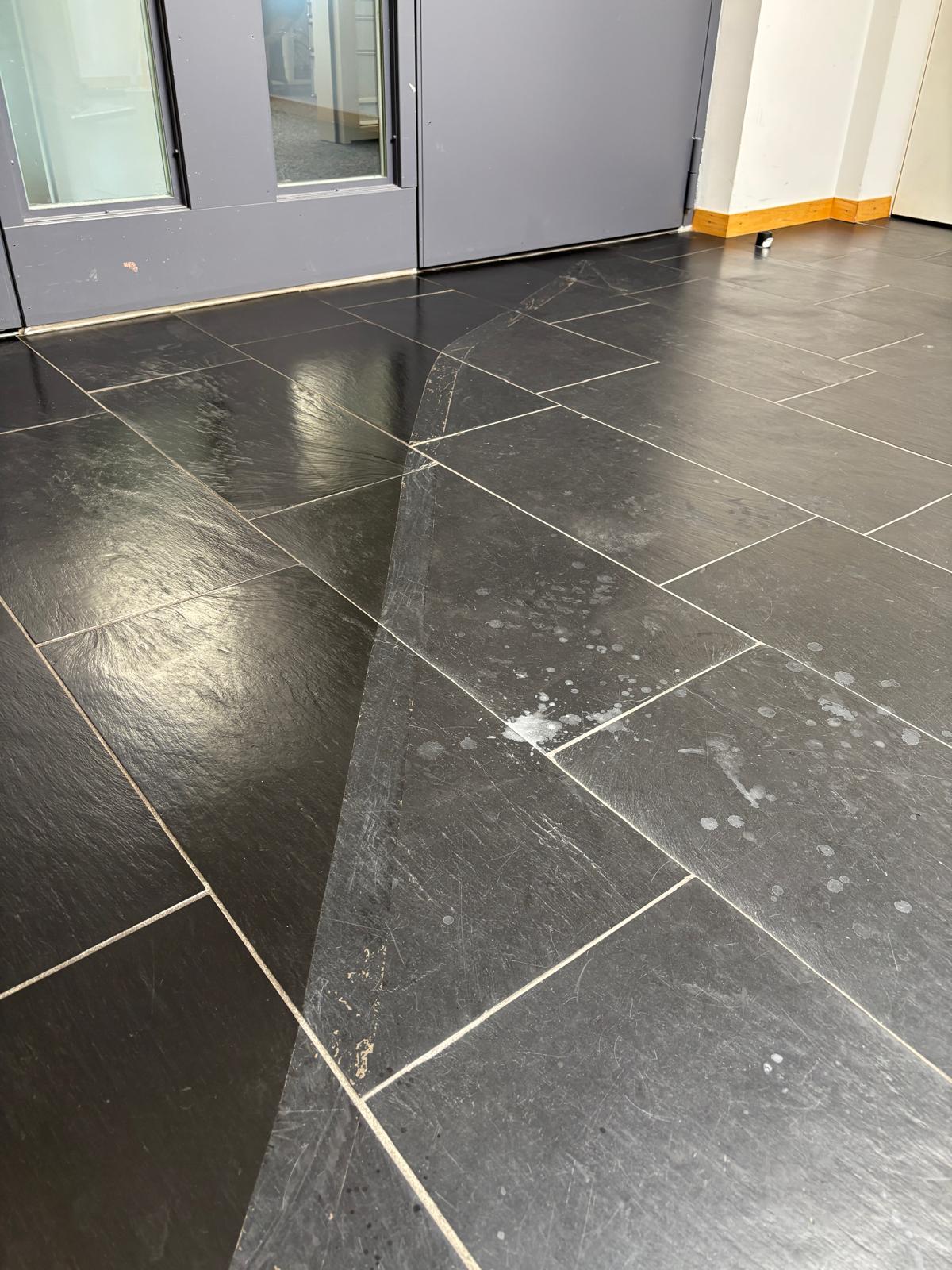
Floors and surfaces are subjected to daily wear and tear: from shoes, moisture, dirt, cleaning agents and normal use. Over time, this can cause a surface to become dull, delicate or significantly more high-maintenance.
Then the question arises:
Does it really need renovating straight away – or can a suitable protective treatment help?
This is exactly where methods like Oiling, waxing, impregnating, coating, sealing or crystallising into the game.
They all pursue a similar goal: to protect, maintain or make the existing surface more resilient.
However, which treatment is sensible depends heavily on the material.
During cleaning, we remove dirt.
A protective treatment goes a step further.
It is intended to make the surface more resistant to new stresses or to make its maintenance easier.
Depending on the material, this can mean:
What is important is:
Not every surface needs a protective treatment – and not every protective treatment suits every surface.
That is why the assessment comes first.
And only after that the product.
A protective treatment is an option, for example, if a surface quickly becomes dirty again despite cleaning or reacts sensitively to moisture and use.
Even floors whose existing protection has diminished over time can benefit from this.
Typical signs can include:
However, that does not automatically mean that every surface should be coated or sealed immediately.
Sometimes a professional deep clean is enough.
Sometimes a new protective layer is indeed needed.
Oiled wooden surfaces have a natural look and feel.
However, over time, the existing protection can wear off.
Then re-oiling can be useful.
Depending on the system, the oil penetrates the wood surface and supports its protection against moisture and normal wear and tear.
Before doing so, however, the floor must be appropriately prepared and cleaned.
Simply applying new oil to a dirty surface would be about as sensible as varnishing a dirty table and hoping nobody notices.
Wax is used as a protective and maintenance layer in certain floor and surface systems.
It can protect the surface against wear and tear while simultaneously influencing the appearance.
Here, too, the deciding factors are which material is available and which products were used previously.
For old care films and new systems do not automatically get on together.
Therefore, before any treatment, it should be clarified what is already on the surface.
During impregnation, the protective agent penetrates the porous surface.
The objective is often to reduce the intake of water or other liquids.
This can be useful, for example, on certain natural stone or mineral surfaces.
The important thing is the difference to sealing:
An impregnating agent generally does not simply form a closed layer on top of the surface.
It has a stronger effect within the material itself.
This makes it of interest for certain surfaces where the original appearance should be preserved as much as possible.
During a sealing process, a protective layer is formed on or over the material.
This can help to protect the underlying surface from moisture, dirt and wear.
Depending on the system, a sealant also alters the appearance and degree of gloss.
It can therefore be practical – but should always be suited to the substrate and subsequent use.
Because a damaged or poorly prepared surface is not automatically improved by a sealant.
What's underneath stays underneath.
Coatings are used when a surface is to be purposefully provided with a durable protective layer.
This can be particularly interesting for floor areas subject to heavier wear.
Depending on the system, coatings can, for example, make cleaning easier or protect the floor against mechanical stress.
Preparation is key.
Dirt, old care films or other residues can prevent a new coating from adhering properly.
Therefore, the actual coating is often just the final step.
The preparation determines how good the final result will be.
Crystallisation is a process that can be used on certain calcareous natural stones.
The stone surface is treated both chemically and mechanically to densify it and improve the shine.
However, the method is not suitable for every type of stone.
In the case of unsuitable material, it can be ineffective or problematic.
Therefore, the same applies here:
Not all natural stone is the same.
Judging solely by the colour can easily lead you astray.
Before a surface can be protected, it must be clean and properly prepared.
Old care product residues, grease, dirt or unsuitable residues can negatively affect the result.
Therefore, professional protective treatment often consists of several steps:
Starting straight at point five might save time.
Mostly, however, only until the complaint.
If the surface is already severely damaged, protective treatment may reach its limits.
Deep scratches, severe chipping, defective coatings or other material damage cannot simply be «sealed away».
This means renovation or repair work may be necessary.
A protective treatment is not a magic trick.
It protects and maintains a suitable surface – but it does not replace necessary repair work.
Before you consider a renovation, first have inspected, what condition actually exists.
Perhaps the floor is just heavily soiled.
Perhaps the existing protection is worn.
Or perhaps it actually needs refurbishment.
Therefore, the correct order is:
Assess – clean – protect.
Not:
Slap something on and hope for the best.
By the way, that is a pretty useful motto for life, not just for floors.
Good cleaning ensures cleanliness.
An appropriate protective treatment can additionally help to make floors and surfaces more resistant, easier to maintain and keep them looking good for longer.
Oiling, waxing, impregnating, sealing, coating and crystallising each have different tasks in this process.
Which method is appropriate always depends on the material, condition and use of the surface.
Or in short:
Not every surface needs to be replaced – sometimes it just needs the right care and appropriate protection.
The Putzvogel GmbH offers various protective treatments such as oiling, waxing, impregnating, coating, sealing, and crystallising in addition to professional cleaning services.
We are happy to assess your floors and surfaces and recommend a suitable treatment.
A broken light in the stairwell, a door that doesn't close properly, leaves in front of the entrance and somewhere there's been […]
The façade is greenish, grey or stained and the whole building suddenly looks a few years older. So, repaint? […]
A new build is finished as soon as the last tradesperson has packed up their tools? If only. On a construction site, despite careful […]
Baden | Schlieren | Wettingen | Urdorf | Altstetten | Bremgarten | Berikon | Geroldswil | Oberengstringen